The Urban Ecosystem: Music Inspired by the Nature of Cities
From publicly posted calendar Checked 9 hours ago
About this event
One of 31 upcoming events at Bell Museum, and 5,489 across Minneapolis.
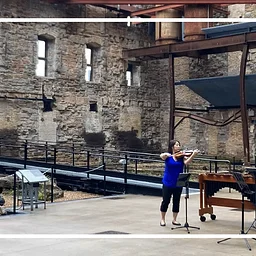
Join us for a unique concert experience that highlights current research into the urban environment where we live, work, and play. This experience blends the worlds of music, nature, art, and research – and offers an opportunity to look at the nature of the Twin Cities in a new way! The Urban Ecosystem is a collaboration between Seattle-based composer Jessi Harvey, the Twin City’s own 10th Wave Chamber Music Collective, and the Minneapolis-Saint Paul Long-Term Ecological Research (MSP LTER) program. MSP LTER is a group of over 100 researchers, students, artists, and community organizers from the University of Minnesota, University of St. Thomas, and other local institutions. They are studying the ecological structure and functioning of urban nature, including pollinators, urban forests, urban watersheds, and lakes and streams. This performance brings ecological research to life through music and visuals. It explores how plants, animals, and humans interact with each other in the lakes, forests, and grasslands that make up our local, urban ecosystem. The piece consists of an 8-movement composition, with one movement for each of the MSP LTER’s areas of research and one to unite them together. The piece is composed for a mixed chamber quartet – percussion, violin, cello, and double bass – and set to a video background. It evokes each distinct branch of the MSP LTER’s research, from different urban habitats to contaminants to policy and governance. Members of the MSP LTER’s research teams will be present before the concert with hands-on activities that illustrate the science behind The Urban Ecosystem. Schedule Doors open at 6:00 pm. From 6:00–7:00 pm, participants can visit with MSP LTER researchers and each other. The concert will begin at 7:00 pm and will be followed by an opportunity to connect with researchers and musicians. Tickets are available from 10th Wave, through Eventbrite. Register here Partners Jessi Harvey Jessi (George) Harvey is a Montana-born, Puget Sound-based freelance composer. Harvey’s works are rooted in a passion for bringing together scientific and musical audiences, integrating social curiosity, humor and a love of knowledge. Harvey has performed across North and South America as well as Europe through opportunities such as the Robb Commission, the Denver Botanic Gardens Landline Residency, Círculo Colombiano de Música Contemporánea, Festival Mujeres en la Música Nueva, Montreal Contemporary Music Lab, and Klavierissimo 2026, with projects being supported by Seattle Symphony Orchestra’s Community Stages Fund, 4Culture, the Prop Foundation, the Harnisch Foundation, the Awesome Foundation, the National Science Foundation and more. Instagram, YouTube, Website 10th Wave Chamber Music Collective 10th Wave’s mission is to cultivate dynamic and intimate artistic experiences, pairing bold contemporary chamber music with a warm, inviting atmosphere that connects and inspires. Active since 2018, 10th Wave offers 4+ concerts each season in the Twin Cities metro area. Led by 3 classically trained instrumentalists of color, 10th Wave prioritizes programming music written by living composers, Minnesotan composers and artists who have been historically excluded from Western Art Music. At 10th Wave programs we strive to build a community around this music, taking special care to craft each concert into a unique experience that audiences of all types can enjoy. Facebook, Instagram, YouTube, Website MSP LTER The Minneapolis-St. Paul Metropolitan Area (MSP) Long-Term Ecological Research Program (LTER) brings together over 100 researchers, students, artists, and community organizers from the University of Minnesota, University of St. Thomas, USDA Forest Service, and other local institutions to study how urban stressors affect the ecological structure and functioning of urban nature, including pollinators, urban forests, urban watersheds, and lakes and streams. Guided by the practice of community-engaged research, the MSP LTER partners with dozens of community and agency/government partners throughout the Twin Cities Metro Area to conduct its work. The MSP LTER is part of the US LTER Network, a group of LTER sites funded by the National Science Foundation (NSF) working together to broaden our understanding of the nation’s ecological services. We thank The Puffin Foundation and the University of Minnesota’s Institute on the Environment for their support of this project.