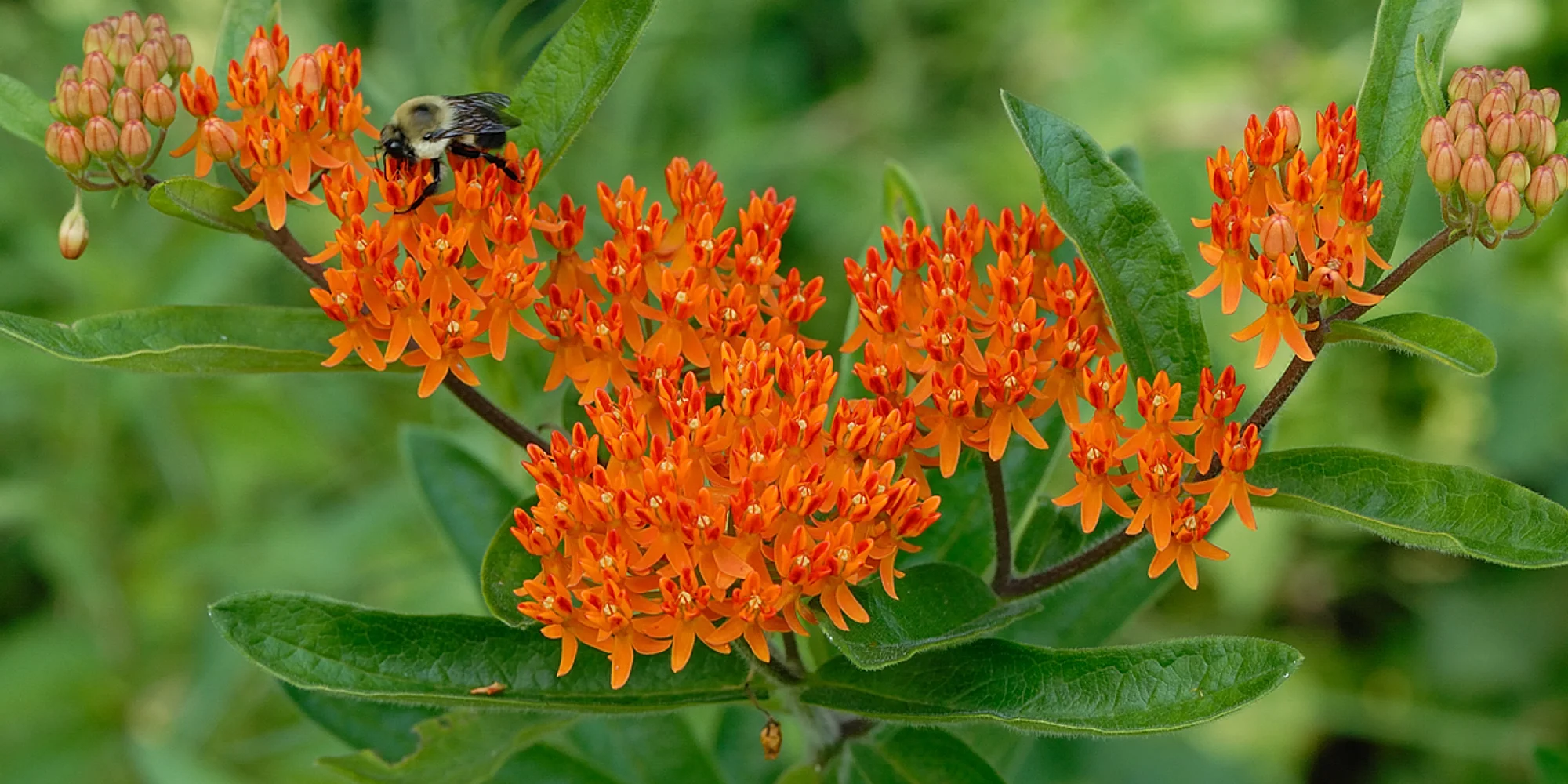
The genus Asclepias, commonly known as the milkweeds, are beautiful and ecologically invaluable plants named for their poisonous milky sap. While milkweeds are toxic for many animals to consume, some insects, like monarch butterflies, rely on milkweeds as a food source and gain protection from its poisonous compounds. Mt. Cuba Center’s Trial Garden, managed by Sam Hoadley and Laura Reilly, evaluates native species and cultivars for their horticultural and ecological value. This research aims to provide gardeners and the horticulture industry with information about superior plants for the mid-Atlantic region as well as highlight the important ecosystem services native plants provide. Since 2023, Mt. Cuba has been evaluating 25 different types of commercially available milkweeds to determine their adaptability to common garden conditions and to access their capacity to support wildlife, particularly monarch butterflies and caterpillars in cultivation. Take a deep dive with Sam Hoadley, Manager of Horticultural Research, into the fascinating world of milkweeds and get a preview of the front running species and cultivars from the trial. A walk through the trial garden to compare form, appearance, and marvel at the wildlife interactions with Sam completes the learning experience. This program takes place in-person at Mt. Cuba Center Friday, June 26, 2026. 🥬 Continuing Education Units (CEUs) available 🥬 New class About the Instructor: Sam Hoadley is the Manager of Horticultural Research at Mt. Cuba Center where he evaluates native plant species, old and new cultivars, and hybrids in the Trial Garden. He earned his degree in Sustainable Landscape Horticulture from the University of Vermont. Some of his favorite native plants include Amsonia, Baptisia, Clematis, and Silphium. REGISTER NOW: General Public Individual+ & Dual+ Members Supporter, Advocate & Conservator Members

A botanical garden that inspires an appreciation for the beauty and value of native plants and a commitment to protect the habitats that sustain them.