MOCA PERFORMS – Wonggongchang Mega Explosive
From publicly posted calendar Checked 23 hours ago
About this event
One of 23 upcoming events at Museum of Chinese in America, and 5,105 across New York City.
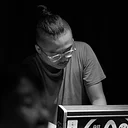
General Admission: $20 | Senior & Student Admission: $15 MOCA Member Admission: $10 Doors Open at 6:00 pm. Show Begins at 7:00 pm. Tickets The Museum of Chinese in America proudly presents Wonggongchang Mega Explosive, the second full-length album by Taiwanese composer, electronic musician, and producer Calvin Kaiˇ-Weiˉ Chang, a.k.a Kaiwei. Released under AAPI artist collective Choaspace, Wonggongchang Mega Explosive is a ten-track sonic narrative and song cycle centered on one of the deadliest man-made disasters in Chinese history: the 1626 Tianqi Explosion, with over 20,000 casualties. Drawing from ancient Chinese classical texts and historical documentations, each piece reimagines anecdotal episodes from the event, unfolding in a format influenced by anthological drama, film and video game soundtracks. Through a contemporary lens, the work integrates found sounds, text-to-speech, and Y2K-influenced sonic cues for explorations of artificiality, emotional detachment, and modern desensitization to large-scale violence in the age of information overload. The evening opens with Brooklyn-based Taiwanese fusion band Trip Lonely. The main act features a hybrid electronic DJ/live-set presenting the album in its entirety, accompanied by Mandarin narration/listening guide by performer Fang Tseng, live visuals by VJ Sam Hikari, and hand-drawn animations by Taiwanese graphic artist Nancy Hsiaowen Hu. The program invites audiences to experience history, through modern perspectives, as a living, resonant field shaped by sound, story, and interpretation. Listen to A Preview: 20K Taels https://www.mocanyc.org/wp-content/uploads/2026/04/20K-Taels_PROMO.wav ABOUT Tianqi Explosion The Wanggongchang Explosion (also known as the Tianqi Explosion) was a catastrophic disaster that occurred on May 30, 1626, in Beijing during the late Ming Dynasty. Centered at a major gunpowder factory and armory, the blast destroyed a large area of the city and reportedly killed around 20,000 people. Contemporary accounts describe a sudden rumbling sound, followed by a massive explosion that flattened buildings within a radius of about 2 kilometers, sent debris flying across the city, and was felt over 150 kilometers away. The exact cause of the explosion remains unknown. While many believe it was an accidental gunpowder detonation, other theories—including a meteor airburst or natural gas explosion—have been proposed, with no definitive consensus. Beyond the immediate destruction, the disaster had major political and cultural consequences. It was widely interpreted at the time as a form of divine punishment, weakening confidence in the Tianqi Emperor and further destabilizing the already declining Ming Dynasty. ABOUT Calvin Kaiˇ-Weiˉ Chang Kaiwei is the progressive electronic music project of Calvin Kaiˇ-Weiˉ Chang, a NY-based Taiwanese electronic musician, composer, multi-instrumentalist and producer. Active in both NY and East Asia’s contemporary music scenes, Chang’s style blends Industrial, Noise, Ambient, Dance and Pop, often explored through experimental techniques, diverse composition methods, and innovative forms. Chang’s works often combine a broad range of improvisational vocabularies with non-traditional post-production, songwriting, and sound design approaches. Chang composed for director Ichen Wang’s 2022 stage play, “Dress In Code”. His debut LP, “Reprocessor” (“darkly invigorating, glitchy soundscapes, touting a dynamic range from unsettling spaciousness to dexterous rhythmic haunts, at times resembling a cross of Burial and Oneohtrix Point Never” – Obscure Sound 2024) was released under Long Echo Records, 2023. Chang was a 2024 Found Sound Nation – OneBeat Taiwan fellow, and was most recently a recipient of Taiwan’s National Cultures & Arts Foundation Grant for his production for composer Chloe Yuchun Hu’s 2025 record, “The Impermanence Of Permanence”. His second LP, Wonggongchang Mega Explosive, is due for 2026 release under AAPI artist collective, Choaspace. Kaiwei 是由旅居紐約的台灣電子音樂人、作曲家、多樂器演奏者與製作人張凱崴(Calvin Kaiˇ-Weiˉ Chang)所主導的前衛電子音樂計畫。活躍於紐約與東亞當代音樂場景之間,Kaiwei 的創作風格融合工業電音、實驗噪音、環境音樂、電音舞曲與流行元素,並透過實驗性技術、多元作曲方法與創新形式持續拓展聲音邊界。其作品常結合廣泛的即興語彙,並運用非傳統的後期製作、歌曲創作與聲音設計手法。Kaiwei 曾為劇場導演王苡禎 2022 年於紐約演出的台灣舞台劇《服妖之鑑》英文版創作音樂。他的首張個人專輯《Reprocessor》(「陰鬱卻振奮、充滿 glitch 聲響的聲景,展現從令人不安的空間感到靈巧節奏幽影之間的動態跨度,某些時刻彷彿是 Burial 與 Oneohtrix Point Never 的交會」——Obscure Sound 雜誌,2024)於 2023 年由布魯克林廠牌 Long Echo Records 發行。Kaiwei 亦為 2024 年 Found Sound Nation-OneBeat Taiwan 於花蓮豐濱之駐村計畫成員,並且其為作曲家胡宇君 2025 年所製作的EP專輯《The Impermanence Of Permanence》於近期獲得台灣國家文化藝術基金會補助。Kaiwei 的第二張全長專輯《Wonggongchang Mega Explosive》預計將於 2026 年由紐約 AAPI 廠牌 Choaspace 發行。 PARTICIPATING ARTISTS Fang Tseng Sam Hikari Trip Lonely