
Paddle in the Park Classic
From publicly posted calendar Checked yesterday
About this event
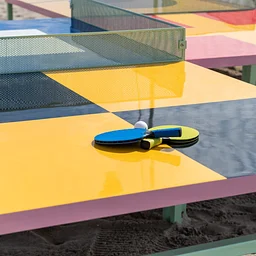
The Paddle in the Park Classic brings an unexpected twist to the contemporary art world with a series of ping-pong matches presented as part of Between Tides, Public Art Fund’s exhibition of artist-designed playable sculptures at Collins Park, presented in association with The Bass. The event brings together artists, curators, collectors, and other cultural figures for three spirited matches, where unlikely pairings and playful stakes put a new spin on old rivalries. Beyond the featured matches, visitors of all ages and skill levels are invited to join the action and play ping-pong across the sculptures, each offering a different experience. With unconventional surfaces that challenge precision, coordination, and expectations, the sculptures invite participants to approach the familiar game through creativity, experimentation, and improvisation. Part art-world showdown, part public celebration, The Paddle in the Park Classic invites everyone to pick up a paddle, cheer on the players, and enjoy an afternoon of music, ice cream, and play. Free and open to all. Registration not required. Paddles and balls will be provided. Moko Fukuyama (b. 1981) is a multidisciplinary artist whose practice spans large-scale sculptural installations, experimental film, and collaborative projects. Originally from Japan and now based in Brooklyn, Fukuyama has lived in various cities across the United States, where she closely observed how urban societies interact with nature. Her work addresses the environmental and cultural challenges shaping both American society and her personal experiences. Drawing from her interest in recreational sports fishing, Fukuyama incorporates the concept of “lures” into her sculptures, using them as metaphors for human manipulation of the natural world. Her work, often made from salvaged wood and painted with vibrant automotive finishes, explores the dynamics of attraction among diverse forms of life. Fukuyama’s sculptures reflect themes of overconsumption, consumerism, sustainability, and urbanization, as well as the tension between human desires and environmental impact. Las Hermanas Iglesias (founded 2005) is an artist duo of sisters Lisa and Janelle Iglesias, who currently split their time between Queens, New York; Western Massachusetts; and Southern California. Their work draws from feminist histories and reflects their identity as children of Norwegian and Dominican immigrants born and raised in Queens, New York. Their collaborative practice blurs genres, engages absurdity, and underscores the power of collective making. Incorporating materials as diverse as music, beeswax, piñatas, and bubblegum, they produce playful work that takes the form of complex installations, sculptural textiles, and participatory performances. Their practice has evolved to include ongoing collaborations with their mother, Bodhild, as well as projects with their children, adding an intergenerational dimension to their work. Through this culturally hybrid practice, Las Hermanas Iglesias explores connections between family bonds and broader societal structures, linking personal experiences to larger social systems. Ilana Harris-Babou (b. 1991) was born and raised in Brooklyn, New York. Through sculpture, installation, and video, she uses humor to question the aspirational language of consumer culture. By taking on roles such as celebrity chef, interior designer, or beauty vlogger in her artworks, she critiques the American Dream and challenges the notion that hard work leads to upward mobility and economic freedom. Harris-Babou investigates the messy moments when individuals cannot fully conform to social structures and explores how to subvert the status quo in generative ways. Recently, she has focused on community-based projects and public commissions examining love, transcendence, imperfection, and self-determination within the aesthetics of order. Her work highlights the persistence of human connection despite the influence of social systems she sees as oppressive. Carlos H. Matos (b. 1983) blends architecture and sculpture to probe the boundaries of function, scale, and materiality within the built environment. Based in Mexico City, his practice examines the intersection of abstract forms and architectural elements, stripping them of their traditional contexts to challenge their purpose and meaning. Drawing inspiration from Mesoamerican cultures, Mexico’s pre-Hispanic heritage, and mid-20th-century modernist architecture, Matos creates works that evoke quasi-fictional worlds where ruins, rituals, and routines unfold. He utilizes materials such as volcanic stone, concrete, and aluminum, collaborating with artisans skilled in traditional construction methods like hand-chiseling and sand casting. Far from offering a nostalgic look at the past, these techniques allow him to investigate new aspects of form and space. Amalia Pica (b. 1978) is an Argentinian artist exploring the social dynamics of communication,