
Tarpon Bay Oyster Restoration
From publicly posted calendar Checked 22 hours ago
About this event
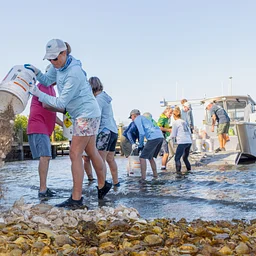
Join SCCF for a hands-on, boots-in-the-muck experience to help restore vital oyster reefs in Tarpon Bay! This hands-on project will improve water quality, create habitat for fish and other marine life, and strengthen the health of our coastal ecosystems. Celebrate the power of community conservation while giving back to the island and our waterways through scientifically driven high-impact stewardship. What to expect Volunteers will assist with filling buckets of shell, transporting materials, and working on degraded reef areas to help revitalize damaged reefs. Participants should expect to get wet and muddy while working alongside SCCF staff to make a tangible impact on the bay. Activities may involve bending, lifting, and walking short distances in shallow water or on uneven terrain. Why Oysters? Oysters are vital estuarine filterfeeders, removing pollutants from waterways while hosting countless marine plants and wildlife. The thriving ecosystem oyster reefs create supports a vast food web of coastal wildlife, as well as protecting coastlines from erosion and storm impacts. Over-harvesting, coastal development, nutrient pollution, and disease threaten oyster populations. At the SCCF Marine Laboratory, we study how oyster restoration can rebuild reef structures and revitalize the estuaries they support. Oyster reef restoration with SCCF is a research-backed, tried-and-true methodology that is hard work but worth every moment. Location notes: Volunteers will meet at the Gavin Site first to load buckets with shell. After the buckets have been filled, volunteers will follow SCCF staff to the Marine Lab (900a Tarpon Bay Rd) to park for the duration of the event. Bathrooms and a rinse off area will be available at the Marine Lab for volunteers to use before and after the boat trip to the restoration site in Tarpon Bay. **Please note that access to Sanibel Island requires a toll when crossing the causeway. Be sure to plan for this expense and allow extra travel time in case of traffic at the toll plaza or causeway. What to bring or wear: For a successful and safe oyster restoration day, please bring the following: Sturdy closed-toe shoes (that can get wet/muddy – old sneakers or water shoes work great) Reusable water bottle (stay hydrated!) Sun protection – hat, sunglasses, and sunscreen Clothes you don’t mind getting dirty and wet – quick-dry or moisture-wicking recommended (waist down might get wet) Volunteer tasks: Oyster restoration trips are divided into three sections. Loading Buckets Volunteers will meet at the Gavin Site (a gated field located around the corner from the SCCF Marine Lab – first right on San-Cap Rd). Here, volunteers will partially fill 5-gallon buckets of fossilized shell and load buckets on a flatbed trailer. Rakes, shovels, and gloves will be provided by SCCF. Transport Shell to Reef Volunteers will drive to the SCCF Marine Lab (900a Tarpon Bay Rd) to transfer the buckets from the flatbed trailer to the boat. Please note that filled buckets range from 20-30 lbs. Once loaded, volunteers will take a short boat ride to one of SCCF's 8 permitted restoration sites in Tarpon Bay. Deploy Shell via “Bucket Brigade” Once at the restoration site, volunteers will enter the water (no higher than waist deep) and form a line from the boat to the reef. Buckets will be passed along the line and dispersed on the reef. The bottom could be muddy and have sharp oyster shell, so closed-toe shoes are required. After all buckets are emptied, volunteers will take a short boat ride back to the lab. *Please only sign up for one shift per event.