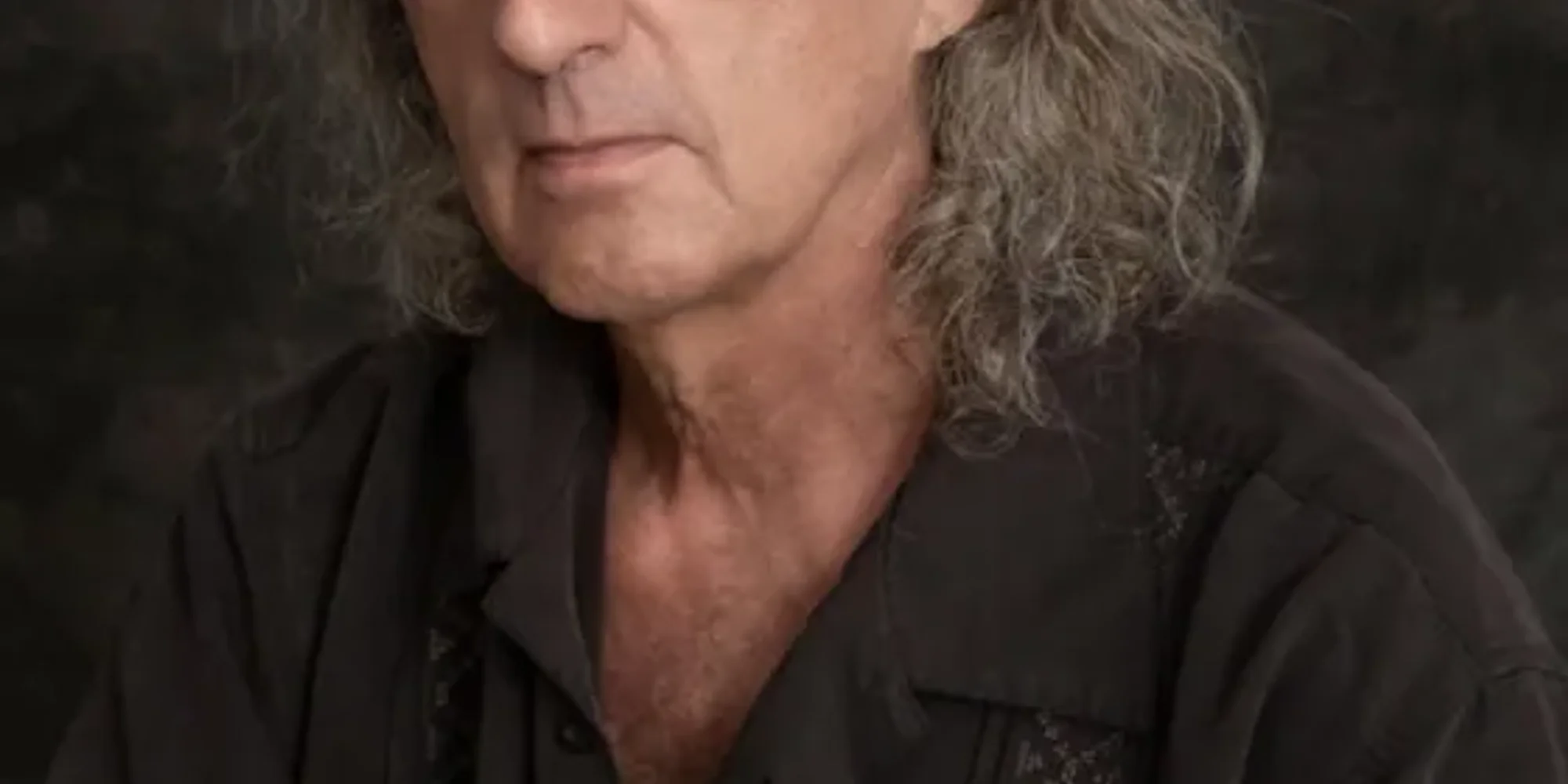
JAMES MCMURTRY A Lone Star sheriff hunts quail on horseback and keeps a secret second family. A mechanic lies among the spare parts on the floor of his garage and wonders if he can afford to keep his girlfriend. A troubled man sees hallucinations of a black dog and a wandering boy and hums “Weird Al” songs in his head. These are some of the strange and richly drawn characters who inhabit James McMurtry’s eleventh album, The Black Dog & the Wandering Boy. A supremely insightful and inventive storyteller, he teases vivid worlds out of small details, setting them to arrangements that have the elements of Americana—rolling guitars, barroom harmonies, traces of banjo and harmonica—but sound too sly and smart for such a general category. As varied as they are, these new story-songs find inspiration in scraps from his family’s past: a stray sketch, an old poem by a family friend, the hallucinations experienced by his father, the writer Larry McMurtry. “It’s something I do all the time,” he says, “but usually I draw from my own scraps.” As any good writer will do, McMurtry collects little ideas and hangs on to them for years, sometimes even decades. “South Texas Lawman” grew out of a line from a poem by a friend of the McMurtry clan, T.D. Hobart. Driven by gravelly guitars and a loose rhythm section, it’s a careful study of a man whose feelings of obsolescence motivate him to take drastic action in the final verse. “Dwight’d stay at our house way back in the ‘70s, when we lived in Virginia. During one visit he wrote this poem about his father’s attitude toward South Texas. He wrote it down on cardboard, and I came across it recently. There was a line about hunting quail on horseback, and that was the seed of the song. I’ve lost the poem since then.” Soon McMurtry had enough of these songs for a new record. “It happened like all my records happened. It’d been too long since I’d had a record that the press could write about and get people to come out to my shows. It was time.” What was different this time was the presence of his old friend Don Dixon, who produced McMurtry’s third album, Where You’d Hide the Body?, back in 1995. “A couple of years ago I quit producing myself. I felt like I was repeating myself methodologically and stylistically. I needed to go back to producer school, so I brought in CC Adcock for Complicated Game, and then Ross Hogarth did The Horses & the Hounds. It seemed natural to revisit Mr. Dixon’s homeroom. I wanted to learn some of what he’s learned over the last thirty years.” During sessions at Wire Recording in Austin, McMurtry observed firsthand Dixon’s grasp of digital recording technology as well as his instinctual approach to tracking. “What Don’s really good at is being able to sense when it’s happening. He can hear when it’s going down. If I’m producing myself and I don’t have him, I have to do three takes and then go in and listen to them. Listening to those three takes can take about 15 minutes. So Dixon’s ability to ...

New Mexico’s Original Craft Brewery☀️ Taproom & Event news: @santafebrew.news