Across Eurasia with the Sogdians: Trade, Religion, and Cultural Exchange
From publicly posted calendar Checked 1 hour ago
About this event
One of 17 upcoming events at Society for Asian Art, and 1,709 across San Francisco.
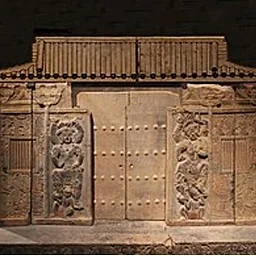
The Sogdians were an Iranian-speaking people from the great Central Asian cities of Samarkand and Bukhara. Between the fourth and eighth centuries CE, they became the most influential merchants of the Silk Roads, establishing trading communities that stretched from Central Asia to China and beyond. More than traders, they served as cultural brokers, carrying not only goods but also artistic traditions, technologies, and religious ideas across Eurasia. Through their far- reaching networks, they helped shape the spread of Buddhism, Manichaeism, Christianity, and Zoroastrianism, leaving a lasting imprint on the art, architecture, and urban life of the Silk Roads. Dr. Sanjyot Mehendale is an archaeologist specializing in the trade, mobility, and cultural exchange networks of Eurasia, with a particular focus on the so-called Silk Roads. She teaches Central Asian and Silk Road art and archaeology at the University of California, Berkeley. Her current research examines medieval highland urbanism in Central Asia through the excavation of the site of Tugunbulak in eastern Uzbekistan, a collaborative project with Michael Frachetti (Washington University in St. Louis) and Farhad Maksudov (Uzbekistan Academy of Sciences). This study group consists of a morning session and an afternoon session. Please note that lunch is not included in the registration fee. Attendees can purchase lunch in the museum café, and are welcome to bring food into the Koret Education Center.