The Legacy of Nancy Grace Roman & Blood Moon Eclipse
From publicly posted calendar Checked 46 mins ago
About this event
One of 810 upcoming events at Stamford Museum Nature Center.
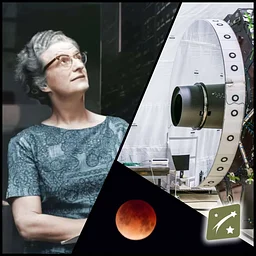
Celebrate the life and legacy of “The Mother of Hubble,” Dr. Nancy Grace Roman — NASA’s first Chief of Astronomy and the visionary whose leadership helped shape the future of space exploration. Adding to this extraordinary night of astronomy, a nearly total lunar eclipse will be underway. The evening begins with Stamford Skies, our signature live planetarium show exploring the wonders above us with a special focus on the groundbreaking telescope. Then, as part of the American Astronomical Society’s Astronomy 250 celebration, join us for a special evening featuring a live Zoom panel discussion, “The Life & Legacy of Dr. Nancy Grace Roman,” moderated by Dr. France Córdova, former Director of the National Science Foundation. The panel will bring together leading voices in astronomy to reflect on Dr. Roman’s groundbreaking contributions and enduring impact on our understanding of the universe. Following the conversation, experience the wonder of a total lunar eclipse as the Moon transforms into a stunning blood moon — a breathtaking reminder of the cosmic discoveries that continue to inspire generations of explorers, scientists and stargazers. Weather permitting, we’ll step outside to observe this celestial event as the Moon passes through Earth’s shadow. Tickets include the full evening’s experience: Planetarium Show, Zoom Panel & Eclipse Observing. Members: $25 Non-Members: $30 REGISTER About NASA’s Nancy Grace Roman Space Telescope NASA’s flagship bus-sized Nancy Grace Roman Space Telescope is set to launch on August 30th at 7:30 am EST. Roman has a uniquely wide field of view that is over 100 times larger than the Hubble, each day taking 1.4 terabytes of data that over it’s 5 year mission will see over 50 times as much sky as Hubble did in 30. Join us from August 27th-30th as we talk about the technology behind the incredible mission, NASA’s first chief astronomer for whom the telescope was named, and the broad scientific opportunities Roman will give us to answer some of our most essential questions about the universe.