Farouk Beloufa: Nahla
From publicly posted calendar Checked just now
About this event
One of 360 upcoming events at The Renaissance Society, and 5,312 across Chicago.
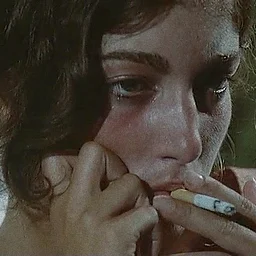
Film still from Farouk Beloufa’s Nahla (1979). Film still from Farouk Beloufa’s Nahla (1979). LOGAN CENTER FOR THE ARTS SCREENING ROOM 201 915 E 60TH ST Nahla Farouk Beloufa, 1979 116 min, 35mm Arabic and French with English subtitles Archival print courtesy Academy Film Archive On the Set of Nahla Jocelyne Saab, 1979 27 min, 16mm-to-digital video Arabic and French with English subtitles Courtesy of Association Jocelyne Saab Farouk Beloufa directed one feature film, Nahla, in the late 1970s, a handful of years before his son Neïl was born. The film holds a powerful place in the history of Algerian cinema, even as 35mm prints of it become increasingly rare, and it left its mark on the younger Beloufa as he began developing his own distinct body of work as an artist and filmmaker decades later. On the occasion of Neïl Beloufa’s exhibition at the Renaissance Society, we’re pleased to screen Farouk Beloufa’s film, as well as Jocelyne Saab’s short film On the Set of Nahla, a behind-the-scenes documentary, also from 1979, that engages the cast and crew of Nahla in conversations about the film. Shot in 1978 but set three years earlier in 1975, Nahla follows the intertwined stories of four characters in Beirut at the onset of the Lebanese Civil War. Nahla, a young singer who loses her voice; Maha, a feminist journalist; Hind, a Palestinian activist who provides a channel to the camps and later joins the resistance; and Larbi, an Algerian journalist caught in the tumult. An elliptically structured political drama, Nahla’s narrative linearity is propelled only by real-life political events: the battle of Kfar Chouba, a meeting between Kissinger and Sadat, the assassinations of Maarouf Saad and Saudi King Faisal, and so on. Co-written with Rachid Boudjedra and produced by Radio Télévision Algérienne, Nahla is the product of a distinct 1970s pan-Arab leftist intellectualism which connected Algeria, Lebanon, Palestine, and beyond. Special thanks to Bidoun, Tiffany Malakooti, and the Film Studies Center at the University of Chicago.