Deborah Roberts: Consequences of being
From publicly posted calendar Checked 6 hours ago
About this event
One of 148 upcoming events at CNY Arts, and 210 across Syracuse.
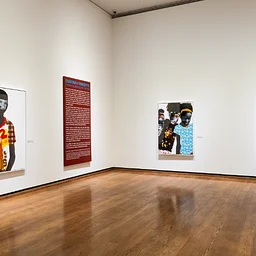
Consequences of being brings together large-format paintings, works on paper, and— for the first time in Deborah Roberts’ career—ceramic sculpture. The exhibition marks a significant expansion of the Austin, Texas–based artist’s practice and a deepening investigation into the histories and legacies of colonialism. Roberts, who received her MFA from Syracuse University, uses collage to approach identity as something fragmented and continually reconstructed, reclaiming found materials and images to examine how Black bodies are seen, positioned, and understood globally. The project broadens Roberts’ historical lens to include Germany, the Netherlands, and South Africa—nations deeply implicated in the exploitation of land and people. In these new works, she repurposes imagery and text from grocery store signage and packaging, referencing foods once discarded or given to enslaved peoples that are now reframed as delicacies. Through these transformations, Roberts considers how colonial histories continue to shape cultural identity, economic access, and the politics of consumption. While her figures bear traces of dehumanizing language and imagery, they are also imbued with presence, dignity, and spirituality, asserting survival and self-definition. Roberts constructs her hybrid figures—often young Black children—through a distinctive collage process that combines found, manipulated, drawn, and painted elements. Drawn from the social and economic environments these children must navigate, the imagery foregrounds the precarity imposed by racial stereotyping and its impact on identity and agency. Her signature expanses of white space isolate the figures, intensifying attention to how Black bodies are centered, measured, and read in relation to structures of whiteness. The exhibition also debuts a new ceramic bust, Zuri, named after the Swahili word for “beautiful” or “good,” affirming enduring cultural lineages and the inherent value, brilliance, and potential of Black children.